Facts from public sources, not quotes. Where these numbers come from

Driveways, sidewalks, HOA streets and commercial lots cleared and salted all winter. Lock in your spot on a local crew's route before the first snow, or request a storm-day visit.
Get a free quote How it worksSnow here is not a maybe. Federal climate normals for the Des Moines airport (NOAA, 1991–2020) put the average season at 36.5 inches of snow. February is the snowiest month at 10.2 inches, January is close behind at 9.4, and December averages 7.9. About 11 days a year bring an inch or more, and the normal January low is 13.8°F, cold enough that ice left on a step or a lot stays there.
The first snow usually arrives before Thanksgiving. KCCI, citing NOAA records, puts the average first measurable snow in Des Moines on November 14, with the earliest on record on October 10 (in 1932 and again in 2009). Snow can keep coming into April. That is a long season to keep a driveway, a sidewalk and a parking lot safe.
The best time to line up snow removal is before you need it. Routes fill up in the fall, and the people who call after the first big storm wait in line.
Waukee Snow & Ice Pros connects homeowners, HOAs and businesses in Waukee, West Des Moines, Clive and Urbandale with a local snow and landscape crew that plows, shovels and salts all winter. Every number on this site links to its public source, and we tell you what we don't know.
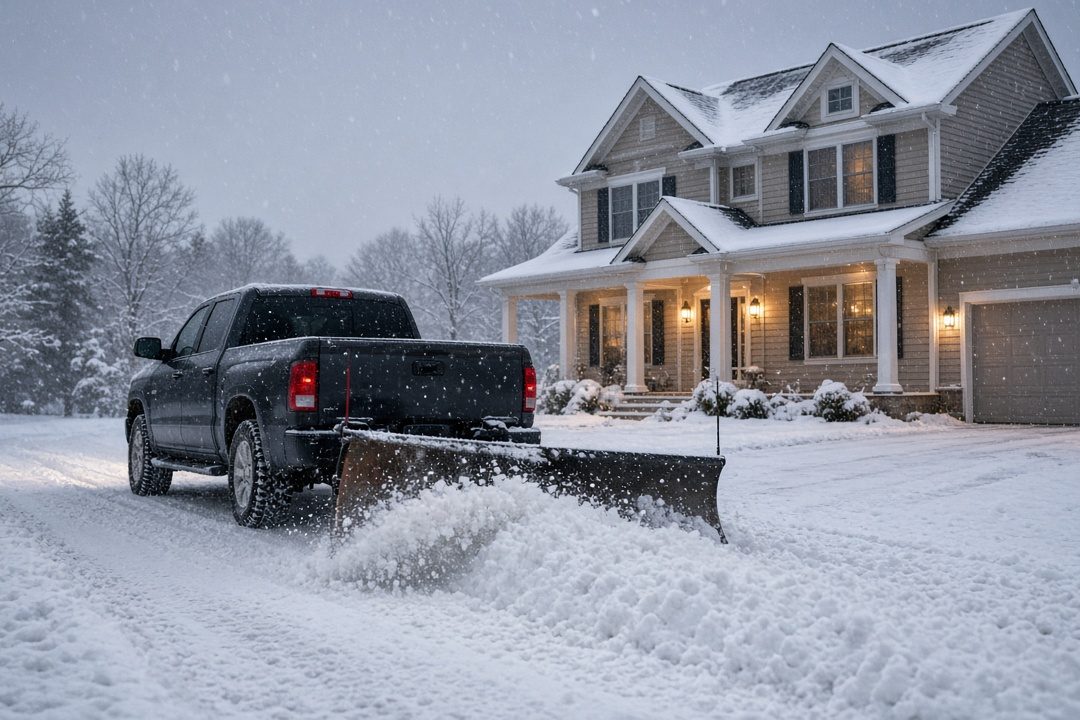
A seasonal residential contract puts your driveway on a route. When snow reaches the trigger depth in your contract, the crew comes without a phone call. Most plans cover the driveway and the front walk, and many add the steps, the sidewalk along the street and a pass of ice melt.
The rules make the sidewalk part matter. The City of Waukee says sidewalks must be cleared within 24 hours after it stops snowing. West Des Moines, Clive and Urbandale use the same 24-hour window, and West Des Moines counts the stretch of sidewalk that crosses your driveway. Urbandale includes crosswalks.
Then there is the windrow, the heavy ridge a city plow leaves across the end of your driveway. West Des Moines says it does not plow private driveways and that clearing that ridge is the owner's job. Ask whether your plan includes a return trip after the city plow comes through. It is usually the hardest snow of the storm to move by hand.
If you clear your own walk between visits, a shovel with a spring-assist handle or a wide snow pusher saves your back, and a pet-safe ice melt is kinder to paws on the front step.
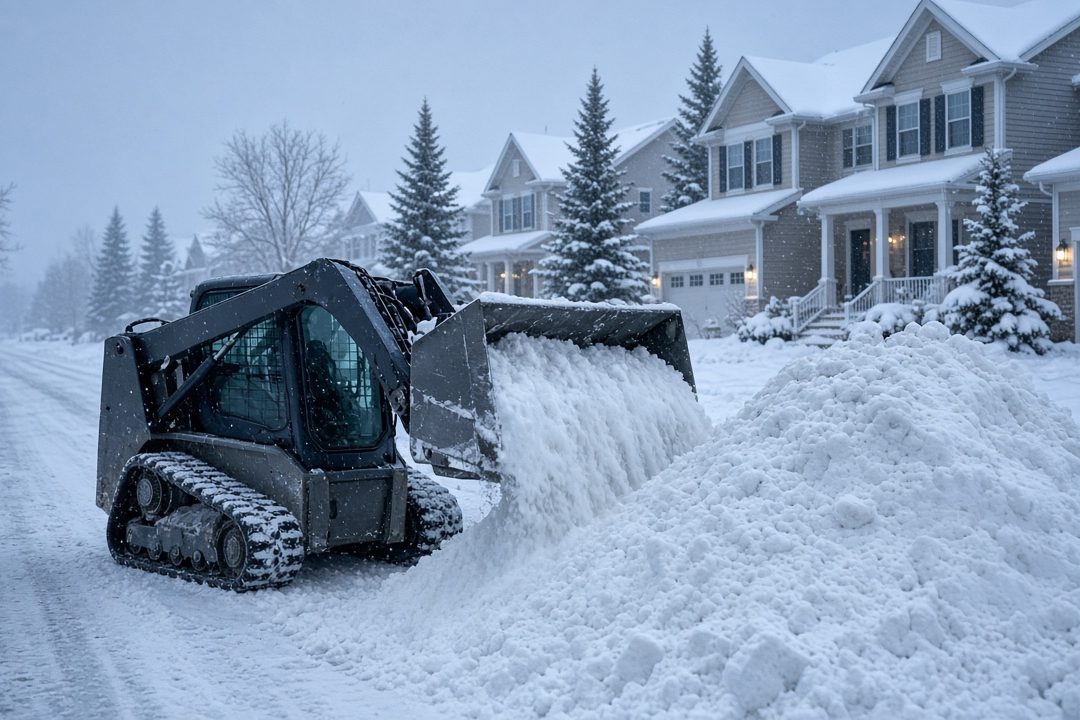
Associations need more than a driveway service. An HOA contract can cover private streets and cul-de-sacs, shared drives, mailbox clusters, common sidewalks, and the walks and stoops in front of every unit. Many boards also want a clear rule for where snow gets piled so it doesn't bury hydrants, block sight lines at corners or end up in the street.
Those piles have rules too. Waukee, West Des Moines, Clive and Urbandale all tell residents not to push snow into the street, and Waukee asks that snow stay off neighbors' property and away from fire hydrants. On a tight cul-de-sac, that means planning where the snow will go before the first storm, not after.
Cities can't do it all for you. Urbandale says it plows about 495 lane miles and 315 cul-de-sacs each storm, so city streets come first and private association streets are on their own. During a declared snow emergency, cars parked on city streets make plowing harder, and Waukee bans street parking for the storm and 48 hours after.
A good HOA proposal spells out the trigger depth, how fast walks are done after the snow stops, what salting is included and how extra storms are billed.

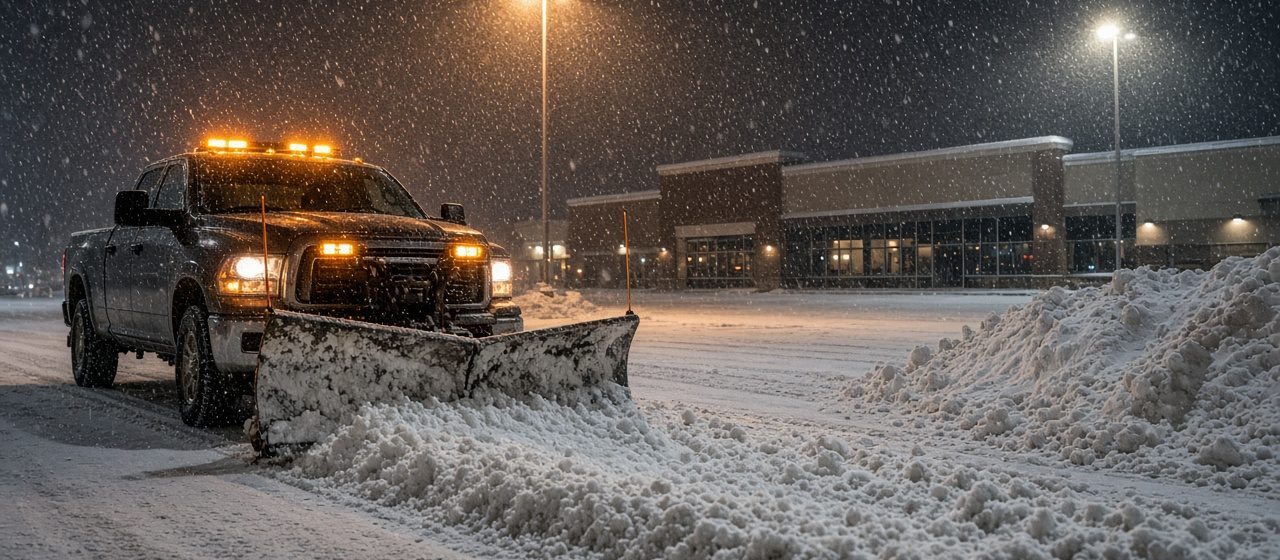
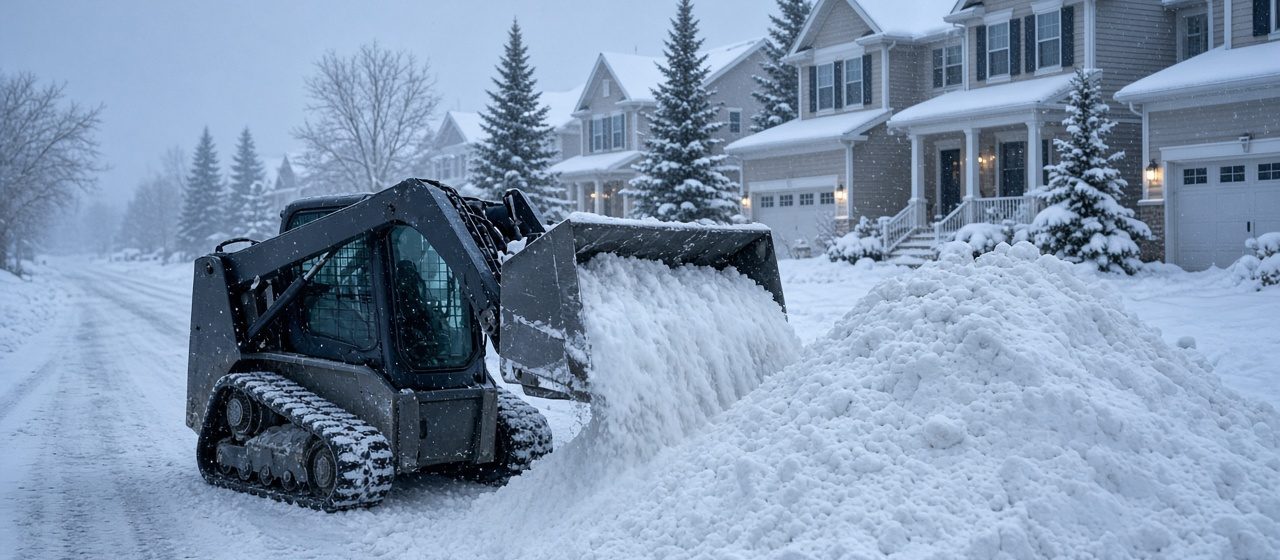
The typical machine for a big lot is a wheel loader with a snow pusher box, the kind of rig that moves a whole lane of snow in one pass and stacks it at the edge of the lot (see a 102-inch skid steer pusher box in the Ice Fighter shop). It's the right tool for the biggest contracts in the west metro: big-box retail lots, warehouse and distribution yards, shopping centers and large office parks where cars, trucks and customers need clear lanes before the doors open.
Big commercial work runs on a plan. A good contract lists the plowing trigger, when the lot must be open, where the snow piles go, how the drive lanes, loading docks and fire lanes are handled, and how salting and sidewalks are billed. Large sites often want crews on site overnight, so the lot is clear before the first shift or the first customer.
Smaller sites get the same attention with the right size of equipment: pickups with plows for office and church lots, and walk crews with blowers and spreaders for storefront sidewalks. ProMatcher's Des Moines numbers list about $100 an hour for commercial lot plowing, and every commercial price is set after a walk-through.

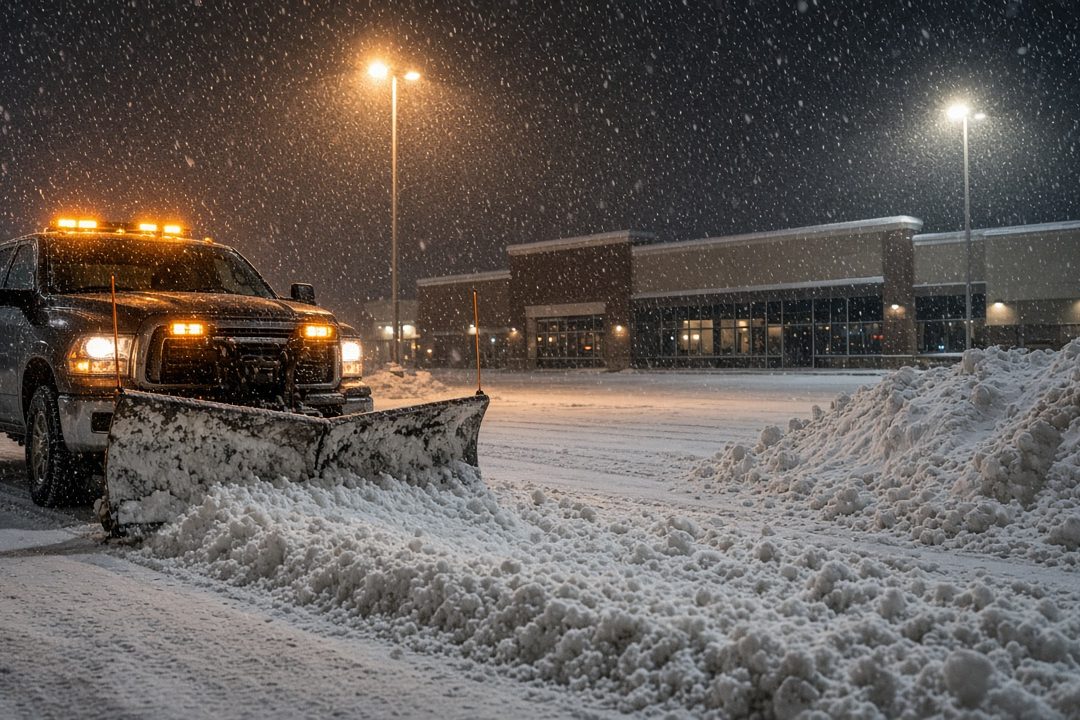
Pickups with plows clear smaller lots overnight, then come back for the drive lanes and entrances during long storms. Ask how the crew handles cars parked overnight.
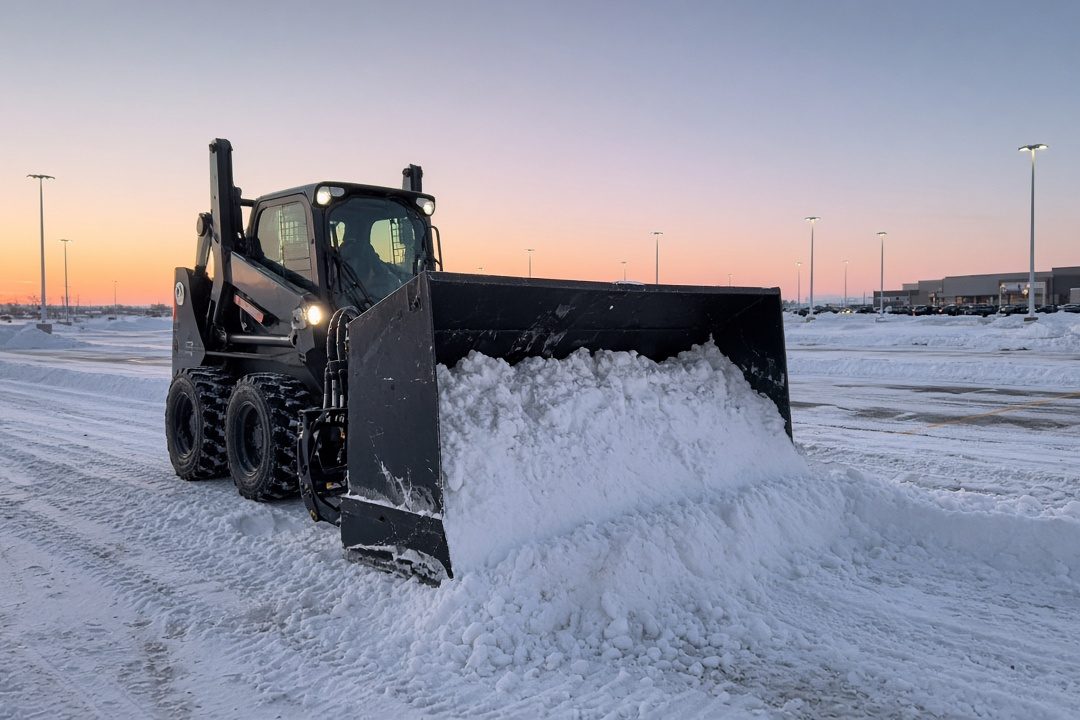
When a big storm lands, large sites need several machines working together: skid steers with pusher boxes, loaders and plow pickups. Ask how many machines will be on your site and how often they return during a long snowfall.
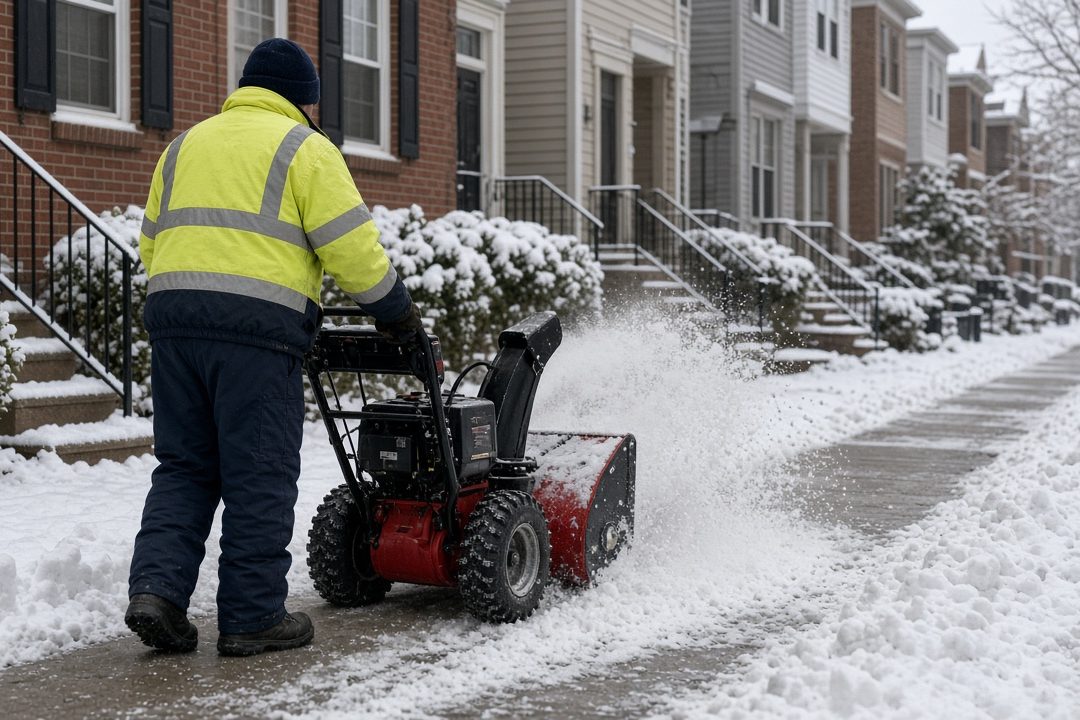
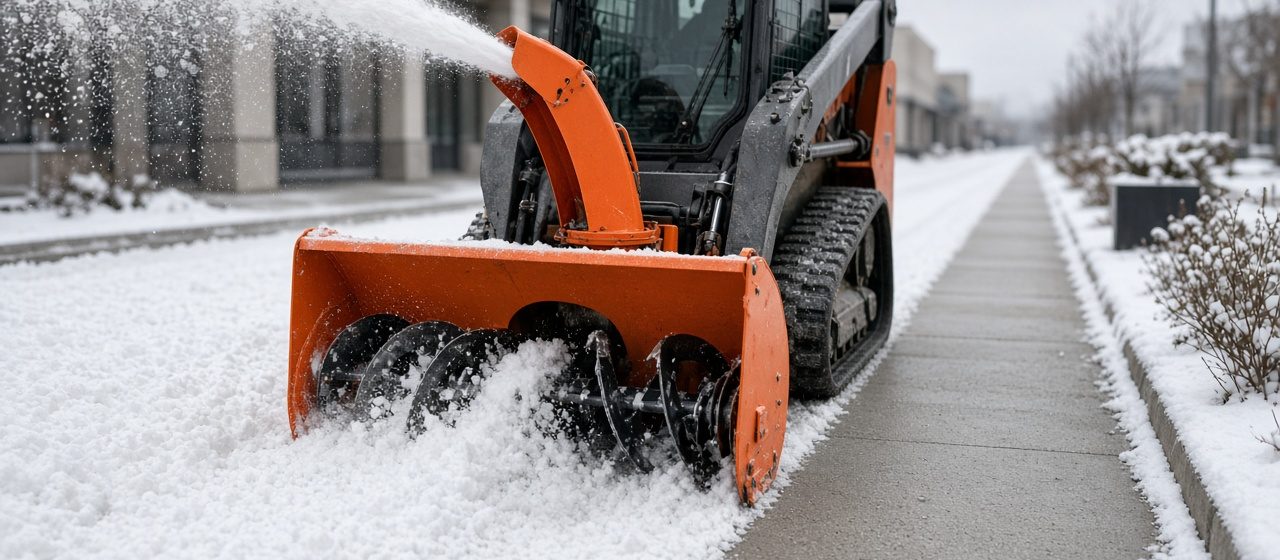
Storefront walks, ramps and entrances are cleared by hand crews with blowers and shovels, then treated so they don't refreeze.
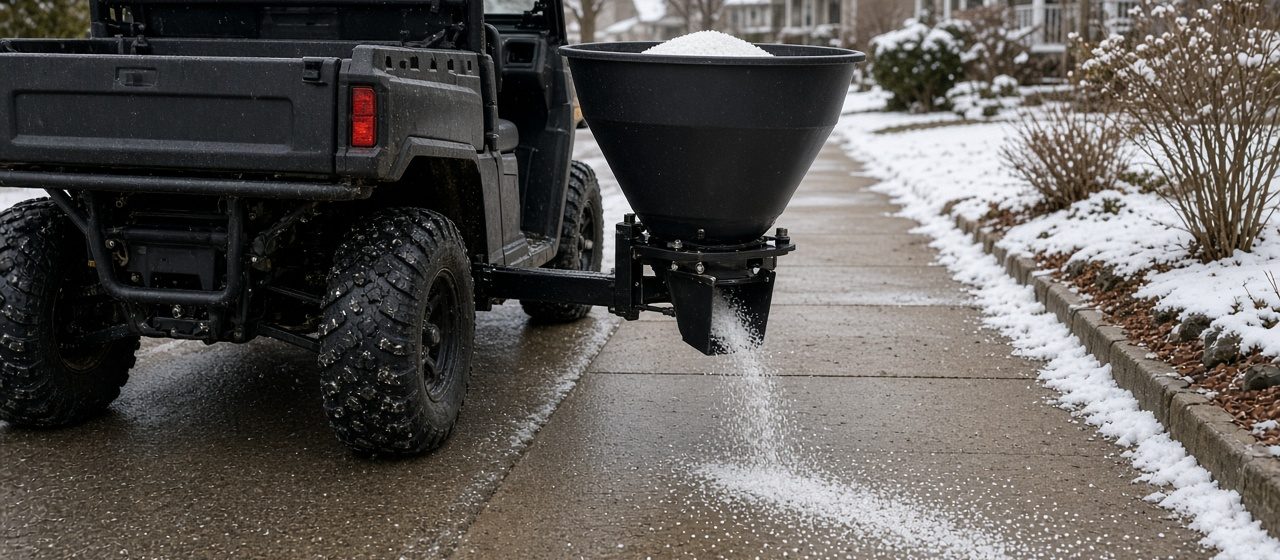

Plowing moves the snow. Salting deals with what's left: the thin layer that packs down under tires and freezes into ice. Contractors spread salt from trucks with tailgate spreaders on lots and streets, and from walk-behind or ATV spreaders on sidewalks and HOA paths.
Cold changes what works. With a normal January low of 13.8°F in Des Moines, treated blends and calcium chloride products earn their price on the coldest nights. A good contractor will tell you what material they use, how often they apply it and how they avoid overusing salt near lawns, plants and new concrete.
Want to see the gear behind a salting route? The Ice Fighter shop lists truck tailgate spreaders, a receiver-mount spreader for an ATV or UTV, a 100 lb walk-behind spreader and pallets of ice melt.
Not on a contract yet? Storm-day calls happen. A one-time plow or shovel visit is usually priced per visit, and ProMatcher's Des Moines data puts the average snow removal visit at $36.82, with a typical range of $32.72 to $40.91. Bigger jobs cost more: one Des Moines job reported in late 2024 ran $100 to $150 a visit for a driveway and sidewalk, and residential hourly work is listed at $45 to $75 an hour.
Be ready to wait during a big storm, because contract customers come first. That's the strongest argument for signing up in the fall. If you just need a hand after a storm, use the form and choose a one-time job.

Front steps and walkways freeze first. A visit can include clearing and a pass of ice melt so the walk is safe in the morning.
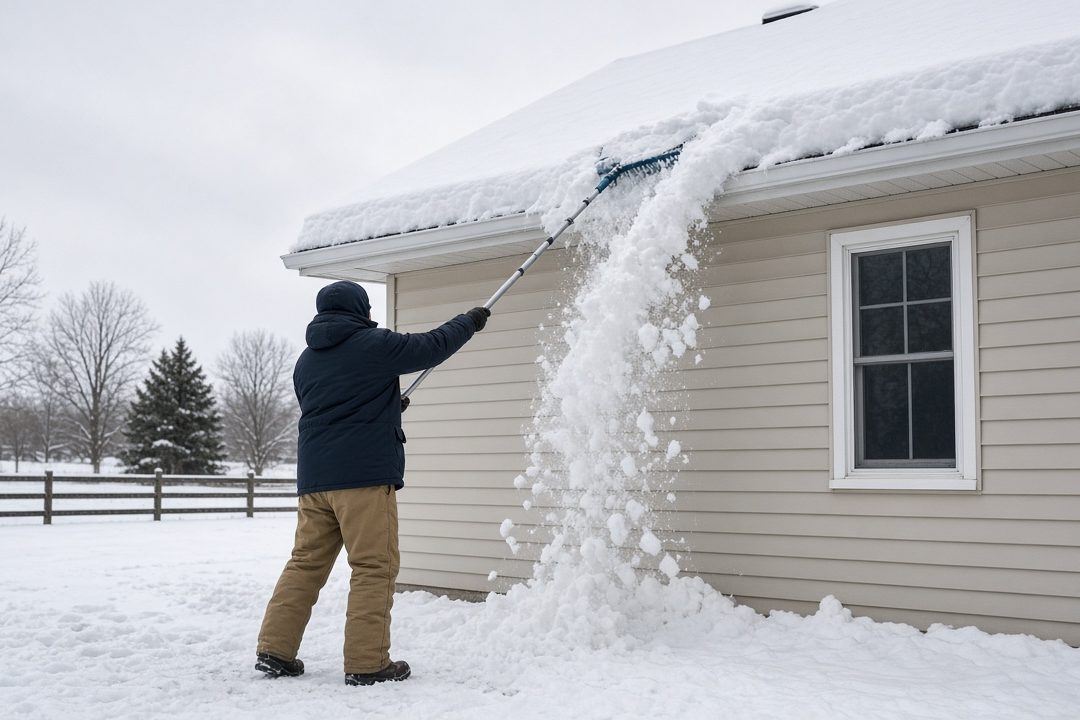
Heavy snow at the roof edge can melt and refreeze into ice dams. From the ground, a roof rake can clear the edge. Anything that needs a ladder is a job for a pro.
A one-time plow visit can clear the driveway and the windrow the city plow leaves at the end.
Each city has its own rules, and they're stricter than most people think. Here's a short version from each city's own page. Check the source before you rely on it.
| City | Sidewalks | Where snow can go | Parking in a snow emergency |
|---|---|---|---|
| Waukee | Clear within 24 hours after it stops snowing | Not into the street or onto neighbors' property. Clear around fire hydrants | No street parking during the storm and for 48 hours after. Fine and possible tow |
| West Des Moines | Clear within 24 hours after the storm ends, including where the sidewalk crosses the driveway | Not into the street. The windrow at the driveway end is the owner's job | See the city's snow page |
| Clive | Clear within 24 hours of a winter weather event | Not into the street | Cars can return 24 hours after the event if the street was plowed curb to curb, 48 hours if not |
| Urbandale | Clear within 24 hours after snow ends, including crosswalks | Blow snow into the yard, not the street | $35 ticket. Assume a ban when more than 1 inch is forecast |
Sources: City of Waukee, City of Waukee, City of West Des Moines, City of Clive, City of Urbandale. Full source list.
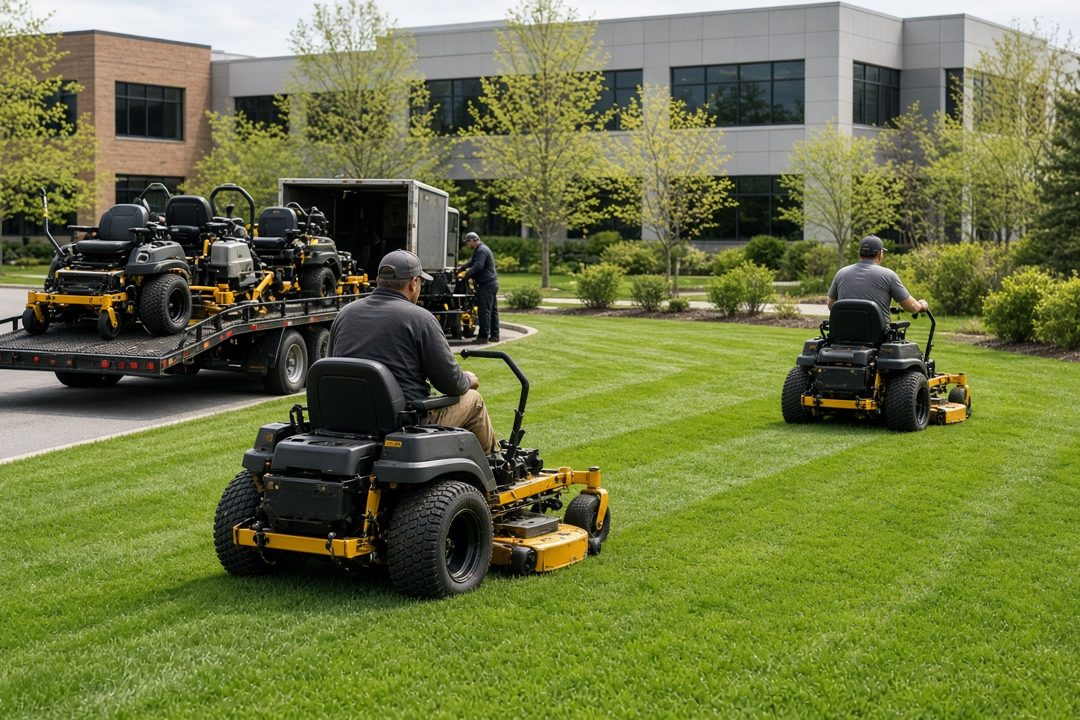
Snow work and landscaping go together. The snow and ice trade group SIMA reports 88,200 snow and ice businesses in the U.S., and more than half of them are lawn and landscape companies. The average operator earns 37% of its revenue from snow, and about 4 in 5 are sole proprietors, which means you are usually dealing with a local owner, not a national chain.
That's good for you. A crew that mows your property in July already knows where the curbs, sprinkler heads and flower beds are when they're buried under a foot of snow in January. When the snow is gone, the same crew can handle spring cleanup and repair any turf damaged by plows or salt.
It's also why customers stay. SIMA reports snow and ice customers are retained 93% of the time from one year to the next. Once you find a crew that shows up, you tend to keep them.
ProMatcher's Des Moines figures put the average snow removal visit at $36.82, with a typical range of $32.72 to $40.91. One Des Moines job reported there in November 2024 (ZIP 50310) ran $100 to $150 per visit for a driveway and sidewalk, and the same report lists $45 to $75 an hour for residential work, about $100 an hour for commercial lots and $100 to $125 an hour for roadways. Your price depends on the size of the area, how often you want service and whether salting is included.
A seasonal contract locks in your spot on the route and a set price for the winter. Pay-per-push or per-visit pricing means you pay only when it snows. Des Moines averages 36.5 inches of snow a season and about 11 days a year with an inch or more (NOAA 1991–2020 normals), but some winters bring far more. If you can't wait for a callback after a big storm, a seasonal spot is usually the safer bet.
In the fall. Des Moines averages its first measurable snow around November 14, and it has come as early as October 10 (KCCI, from NOAA records). Local landscaper Signature Lawns calls September through November the ideal time to schedule seasonal snow removal plans. Routes fill up, so asking early gives you the best chance at a spot.
The City of Waukee says sidewalks must be cleared within 24 hours after it stops snowing. West Des Moines, Clive and Urbandale also use a 24-hour rule. In West Des Moines that includes the sidewalk where it crosses your driveway, and in Urbandale it includes crosswalks.
No. Waukee, West Des Moines, Clive and Urbandale all tell residents not to put snow from driveways or sidewalks into the street. Waukee also asks you not to move snow onto a neighbor's property and to clear around fire hydrants. Snow should be piled on your own property.
No. West Des Moines says plainly that the city does not plow private driveways, and that clearing the ridge of snow a city plow leaves at the end of your driveway is the owner's job. That windrow is often the heaviest snow of the storm, so ask your contractor whether a return trip for it is included.
During a declared snow emergency, cities ban street parking so plows can clear curb to curb. In Waukee the ban lasts for the storm and 48 hours after it, with a fine and possible tow. Urbandale tickets are $35 and the city says to assume a ban when more than an inch is forecast. In Clive, cars can go back on the street 24 hours after the event if the street was plowed curb to curb.
West Des Moines says it does not plow private driveways, and the ridge of snow its plows leave at the driveway entrance is the owner's to clear. Plan on clearing that ridge yourself, or ask your contractor to come back for it.
All four cities tell residents not to put snow in the street. Waukee says violators may face assessments or fines.
Too much salt wastes money and can harm concrete and plants. Rock salt also slows down in deep cold, and the normal January low in Des Moines is 13.8°F. Ask your contractor what they use when it gets that cold.
Heavy snow at the roof edge can melt and refreeze into ice dams that push water under shingles. A roof rake used from the ground keeps the edge clear. Hire a pro for anything that needs a ladder.
Plenty of people pair a contract for the driveway with a little work of their own between visits. If that's you, a few tools make Iowa winters easier.
For long driveways, a two-stage snow blower like the Husqvarna ST224 or the battery-powered EGO 24-inch two-stage handles heavy, wet snow. For the roof edge, a 20 ft roof rake or a 30 ft roof rake with a slide lets you work from the ground. A heated walkway mat keeps one path clear without salt.
Winter storms can also take the power down. A portable inverter generator such as the AIVOLT 4,200W can keep a fridge, a sump pump and the furnace blower going. Run it outdoors only, far from windows and doors, and keep snow away from the exhaust.
See every pick in the Ice Fighter shop, or let a crew do the heavy lifting.
Most contracts start at a set snow depth. Ask what it is, and whether a light snow followed by ice gets a salting visit.
When will the driveway be clear, and when will the sidewalk be done? Remember the 24-hour sidewalk rule in all four cities.
Will the crew come back after the city plow fills the end of your driveway? In West Des Moines, that ridge is the owner’s job.
No snow in the street. Agree on where piles go, especially on tight lots, cul-de-sacs and corner lots.
Ask for proof of liability insurance, especially for HOA and commercial work where slip-and-fall risk is high.
Stake curbs, beds, sprinkler heads and low walls before the ground freezes so blades don’t chew them up.
Tell us what needs clearing, your ZIP code and anything that helps: driveway length, sidewalks, steps, a parking lot, an HOA street or a business entrance. Your request goes to a local snow and ice crew serving Waukee, West Des Moines, Clive and Urbandale, and they contact you directly with questions and a price.
No cost and no obligation to ask. Seasonal contracts fill up before the first snow, so fall is the best time to ask.
Before you sign, ask for proof of insurance, what snow depth triggers a visit, whether sidewalks and salting are included, and how storm-day calls are billed.
